

Blog
The Importance of High-Security Perimeter Fencing for Critical Infrastructure

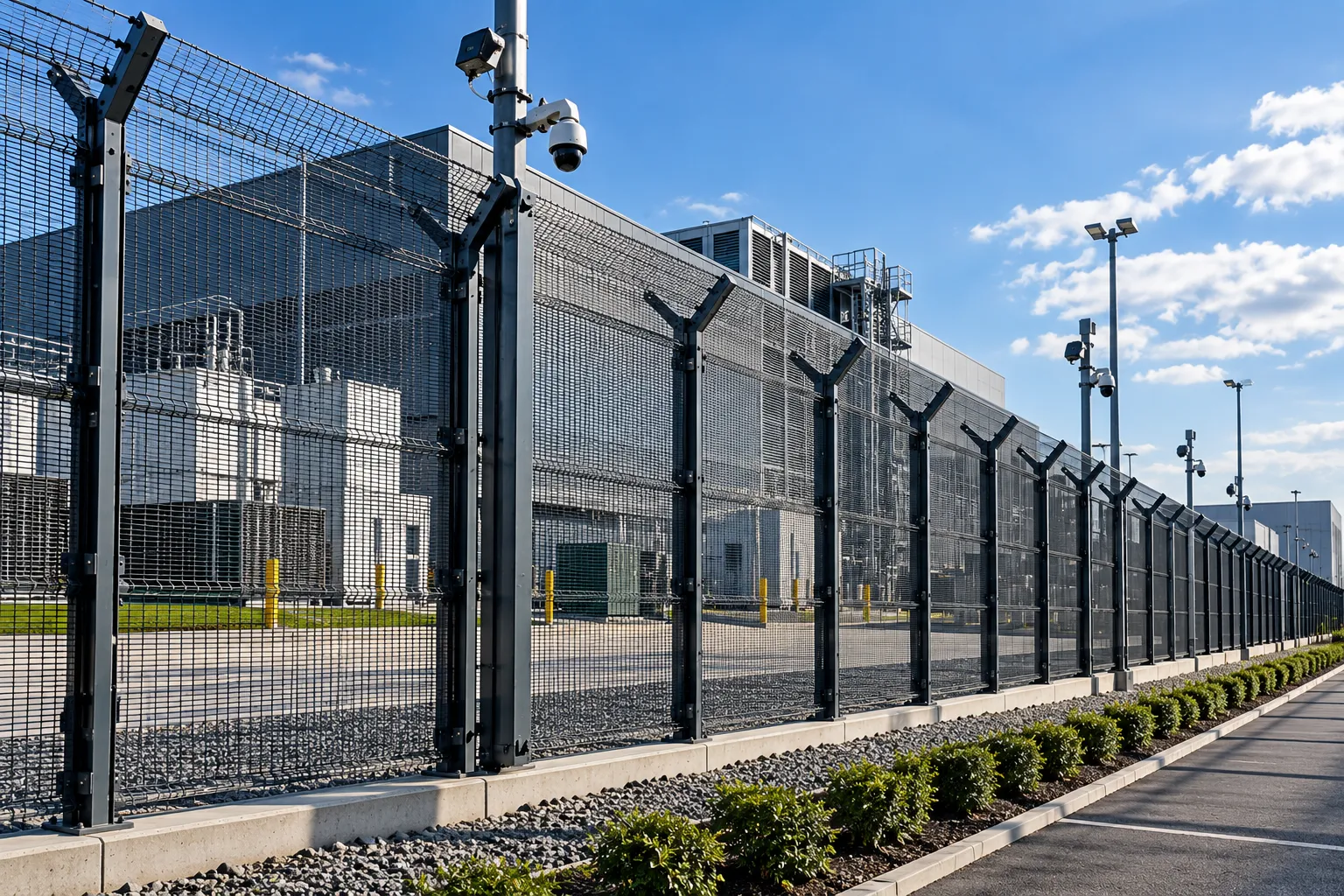
For power stations, water plants, data centres and industrial sites, the perimeter fence is the first physical layer of security. It marks the boundary, controls who comes in and out, and slows down anyone who tries to get in without permission. A well-chosen fence gives security teams what every site needs: time to detect, assess and respond.
More than a boundary line
An ordinary fence keeps honest people out. A high-security fence is designed to resist cutting, climbing and forcing, so an intruder needs more time, more tools and more effort to get through. That delay is what turns a fence from a marker into a working part of the security plan.
What to look for
- Anti-climb mesh – narrow openings that give no hand or foot holds.
- Cut resistance – heavy wires or expanded metal that slow down hand and power tools.
- A rigid framework – strong posts, rails and reinforced connections, so panels cannot be pushed or lifted out.
- Clear sightlines – open mesh that lets CCTV and patrols see along and through the fence line.
- A durable finish – galvanised and powder-coated steel for long service in heat, sand and coastal air.
Part of a layered system
The fence works best alongside the other layers of site security: intrusion detection on the fence line, CCTV, lighting, controlled gates and vehicle barriers. Planning these together from the start avoids weak spots, for example at gates, drainage channels or where the fence meets a building.
Matching the fence to the risk
Not every site needs the heaviest system. The right choice depends on what is being protected, the likely threat, the site layout and how the perimeter will be watched. Vantor’s range runs from modular anti-climb fencing to layered ultra-high-security systems, each configured to the site.
Explore Vantor security fences or talk to our team about your site.