


Blog
Anti-Drone Barrier Systems: A New Layer of Perimeter Protection


Fences, gates and bollards protect a site at ground level. Operators of energy, utility and industrial facilities now also have to think about threats from the air. One-way attack drones are a recognised risk, and their speed and low flight profile leave operators with very little warning.
Why detection alone is not enough
Drone detection and electronic countermeasures remain essential, and most sites already plan for them. But no electronic system can guarantee that every drone is detected and stopped in time. That is where a physical layer matters: it stays in place whether or not a drone has been detected, tracked or disrupted.
How a physical barrier helps
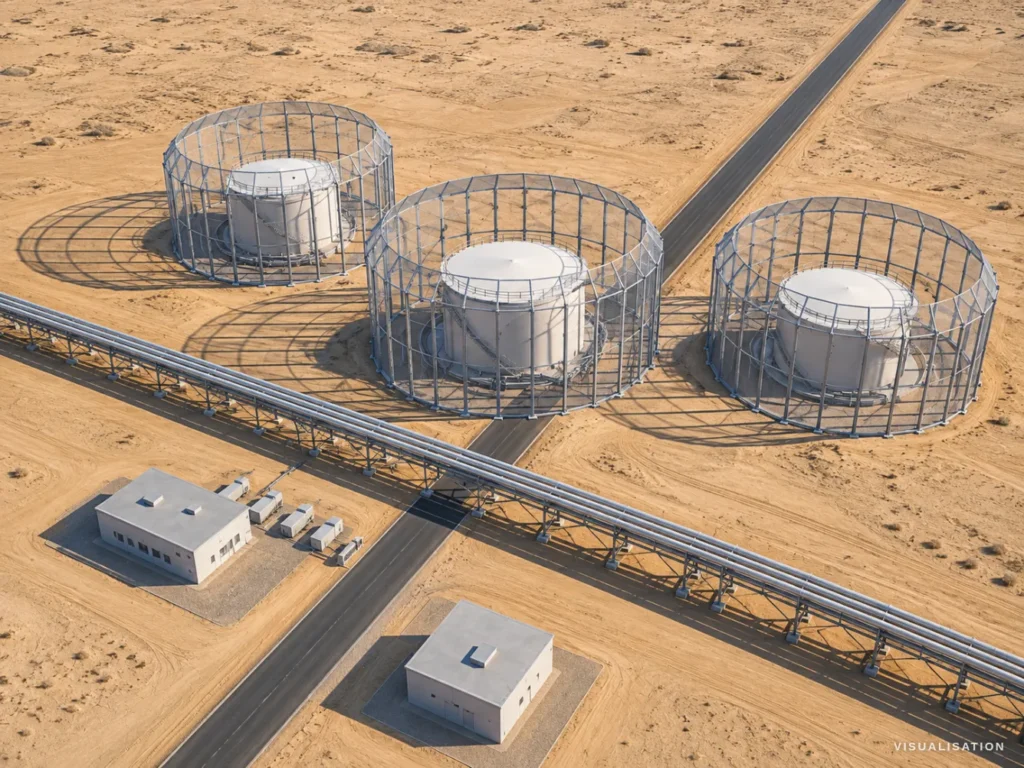
An anti-drone barrier is a steel structure built around the asset it protects. Vantor’s SKYBASTION system uses high-tensile steel mesh on an engineered steel frame, designed to intercept an incoming drone, hold it, and keep any detonation at a distance from the protected equipment. It is entirely passive and needs no power, electronics or operator.
One layer of three
Effective counter-drone protection is delivered in layers:
- Detect – sensors identify and track approaching drones.
- Disrupt – electronic countermeasures act to defeat the drone in flight.
- Protect – a steel barrier separates the drone from the asset.
The physical barrier is designed to complement detection and countermeasure systems, not to replace them.
Designed around each site
Every installation is engineered for its site, based on the assets to be protected, the threat the client defines, the site layout and ground conditions, and any systems already in place. Typical applications include fuel storage, power generation and substations, data centres, process plants, water infrastructure and ports.